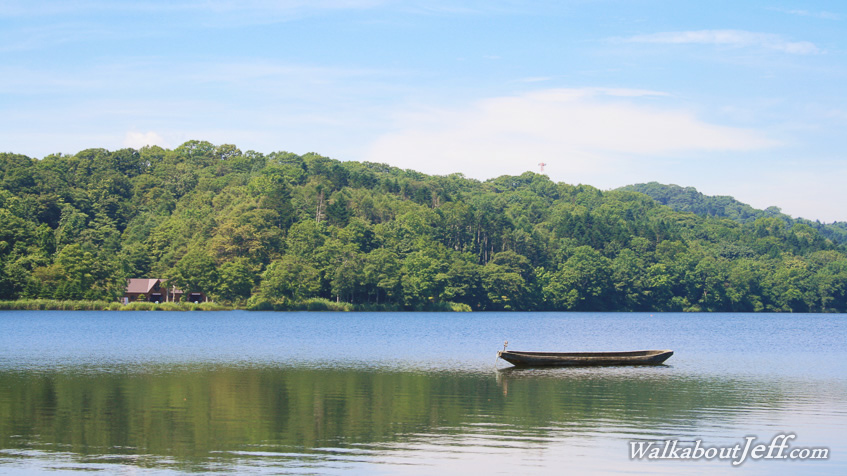
Introduction to today's journey
Hokkaido's Ainu people trace back millennia, representing a resilient indigenous culture deeply intertwined with the island's rugged natural landscape. Believed to have migrated from Siberia and settled in Hokkaido and parts of Russia's Kuril Islands around 14,000 years ago, the Ainu developed a distinct way of life characterised by animistic beliefs, skilled hunting, and intricate craftsmanship. They revered nature as sacred and maintained a close relationship with the land and sea, abundantly supplying their needs as they fished, hunted and gathered the island's rich resources. Throughout history, interactions with mainland Japan led to cultural exchange but also marginalisation as Japanese colonisation of Hokkaido intensified in the late 19th century. The colonisation resulted in the suppression of the language and culture. Despite these challenges, efforts to revitalize Ainu culture and recognition as an indigenous people in Japan in modern times is marking a significant step towards preserving and celebrating the rich Ainu heritage today.
Today's journey takes me southward by train from Sapporo stopping at the historical area of Shirioi where I explore an indigenous Ainu settlement. From there I continue by train southward to Hokkaido's southernmost city Hakodate.
Today's Journey
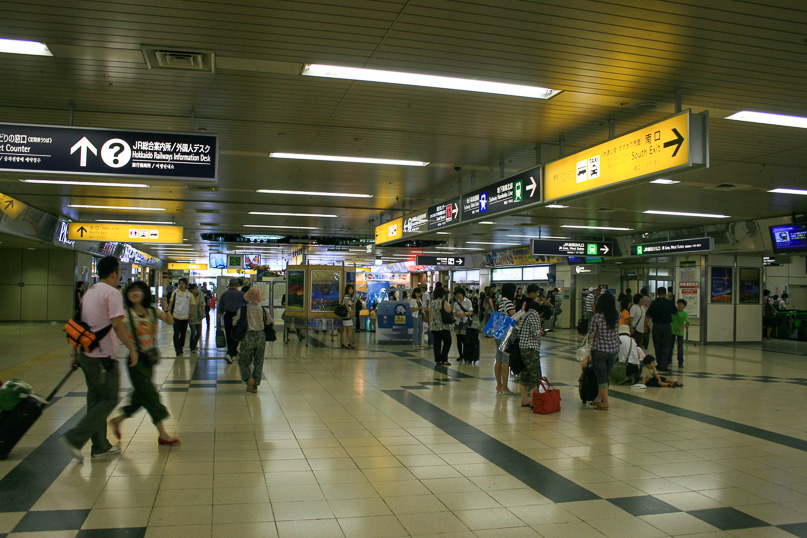 |
From the city centre I head down into one of the many subways to catch a train heading south. |
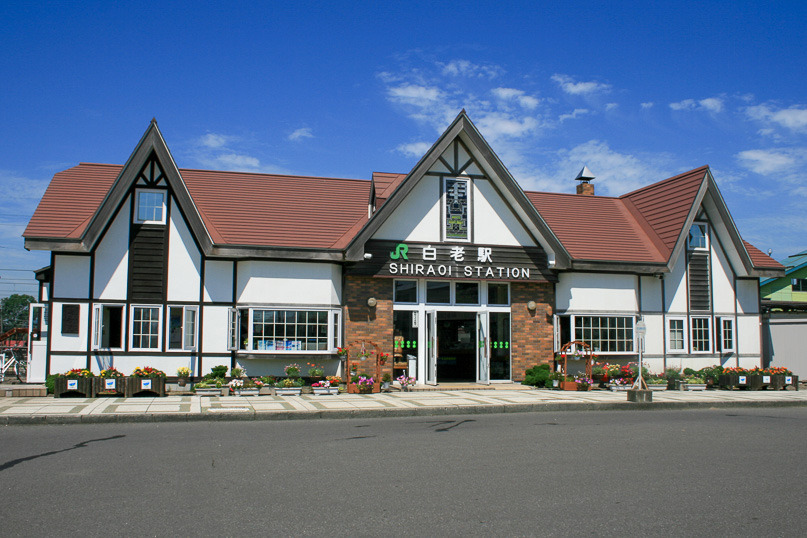 |
Stopping at the very charming Shiroi Train Station. |
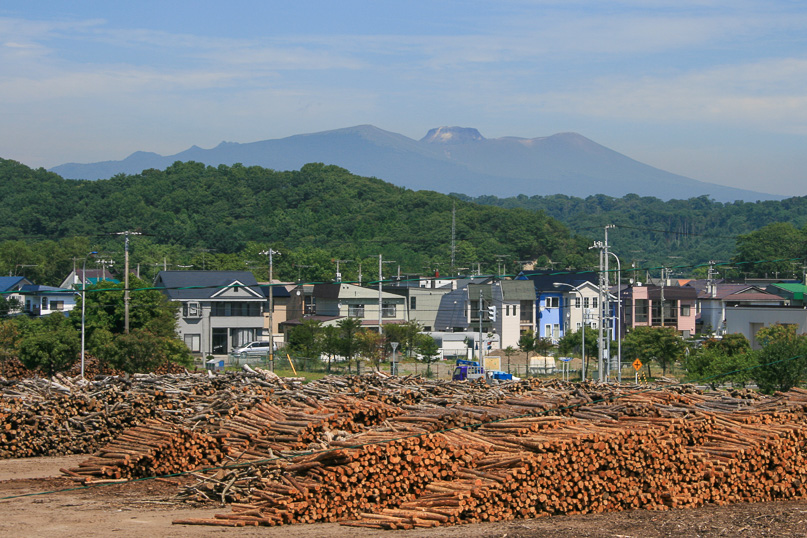 |
From the station I look across a logging yard to Mount Tarumae. |
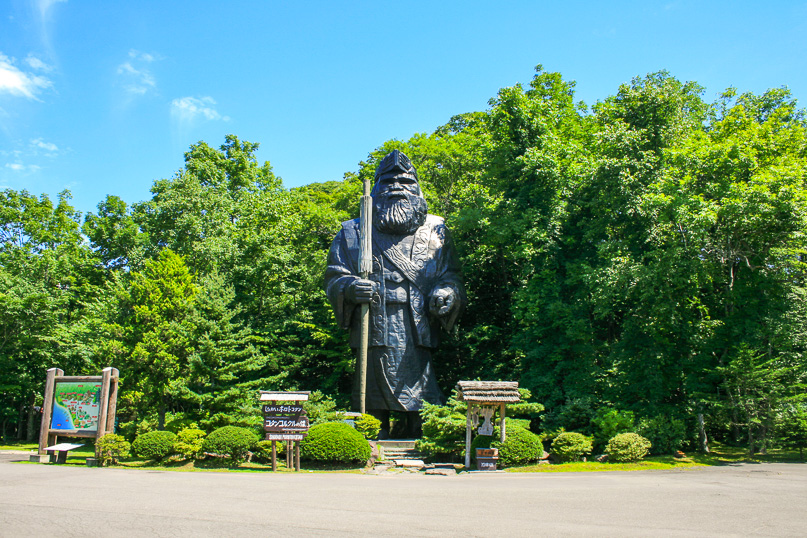 |
A short walk from the station brings us to the Upopoy National Ainu Museum and Park. The Ainu people were the original inhabitants of Hokkaido, Sakhalin and the Kuril Islands. |
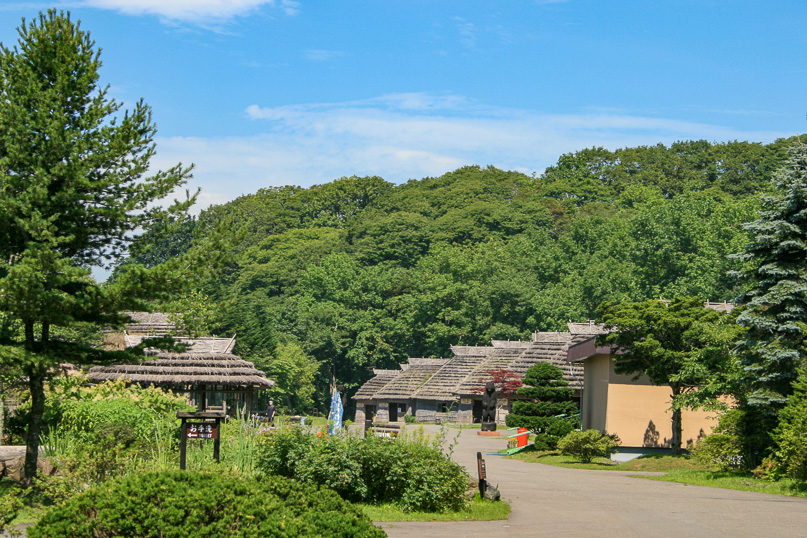 |
Entering the park, I reach a traditional Ainu village. |
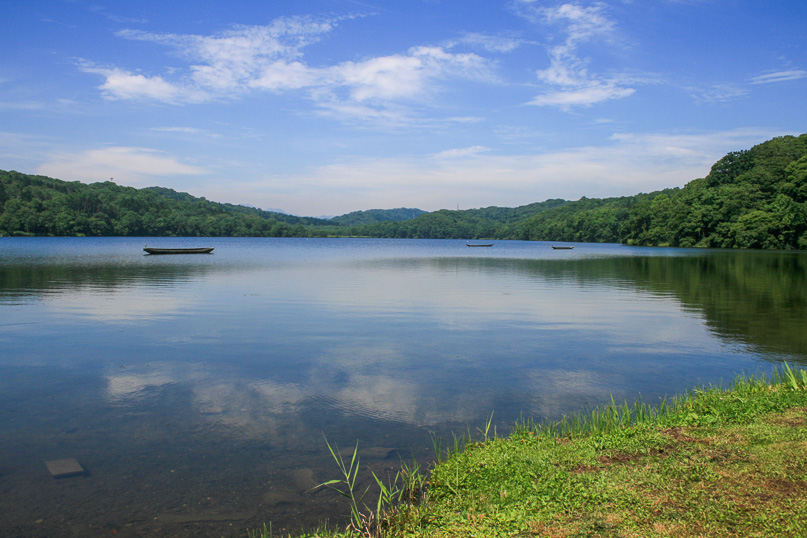 |
The village sits at the edge of the tranquil Poroto Lake. |
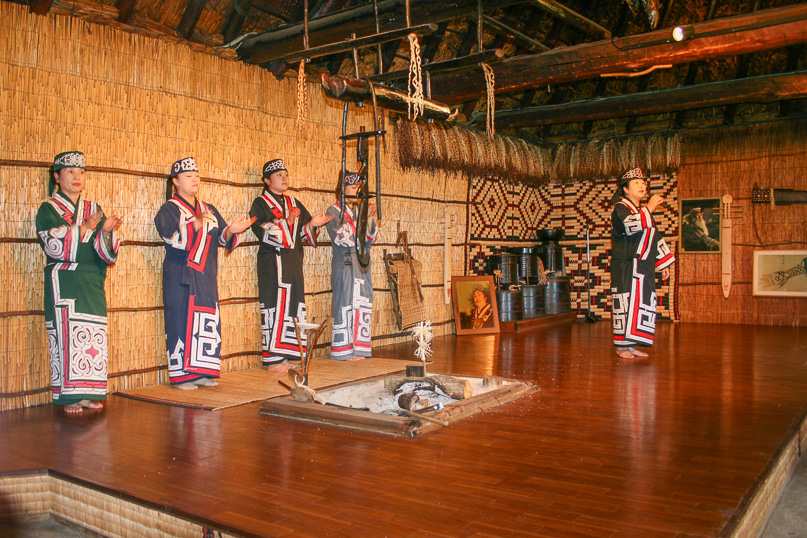 |
Inside one of the wooden thatched houses of the Ainu Museum. The Ainu people are believed to have originated in what is now the Russian Okhotsk area, arriving here long before the more mainstream Japanese people who migrated from areas of the Asian mainland further south. |
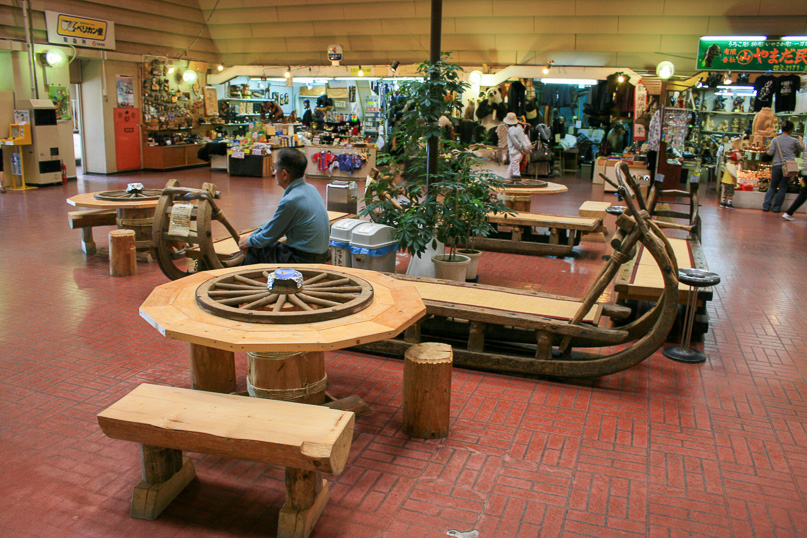 |
After exploring the village, we head to the local shops where several craftsmen are selling timber carvings. |
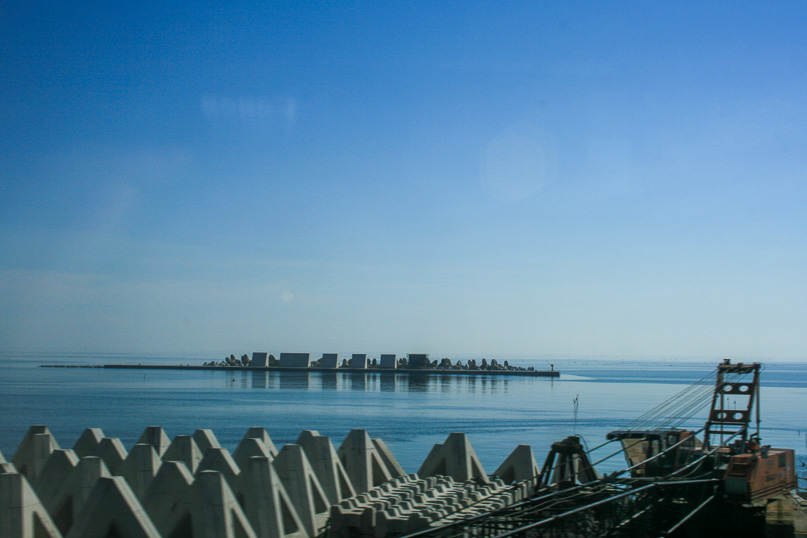 |
We return to Shirioi Station and continue travelling along the coast, turning north westward into the start of Uchiara Bay which swings over 180 degrees forming the tail of Hokkaido. Interesting concrete formations help to resist the impact of potential tsumamis common in this area close to a major offshore fault line. |
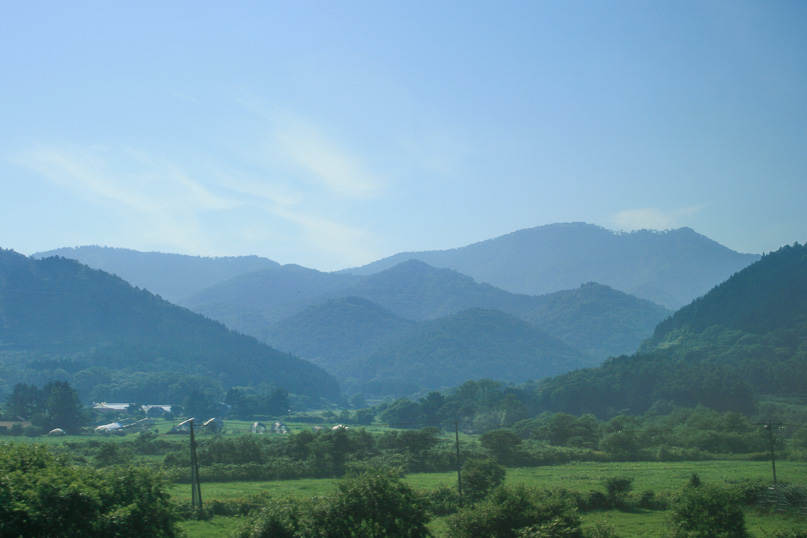 |
High forested hills occupy most of the land, leaving small pockets for farming. |
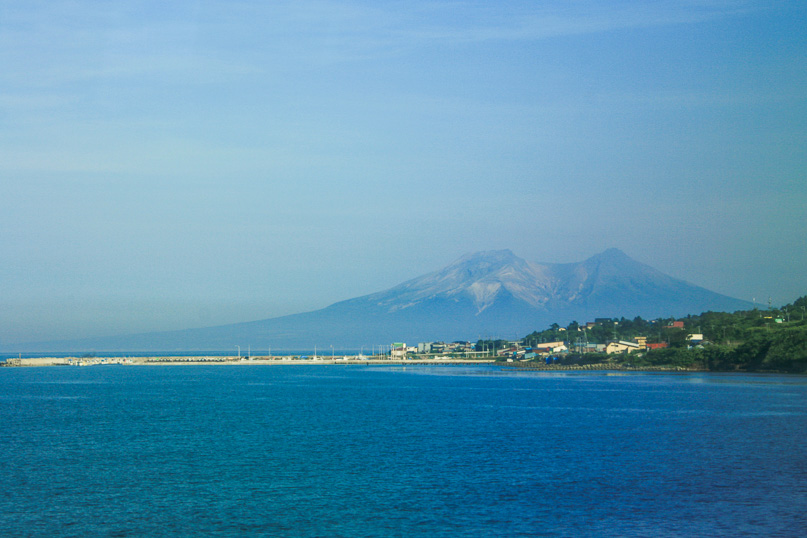 |
When we finally get right around the bay, the train heads inland passing more mountains. The spectacular 1131 metre high Koma-ga-take volcano dominates the skyline. It had a major eruption in 1640 creating a huge tsunami in the bay.
|
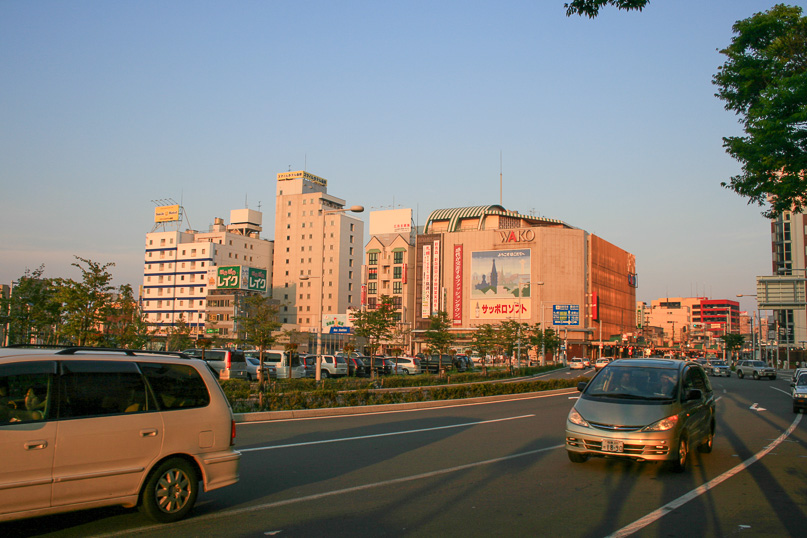 |
As the sun sets, we reach the southern city of Hakodate. |
|